25+ Years Professional Cosmetic Packaging Manufacturer

From Trend to Necessity: Data, Materials, and Brand Strategies for Sustainable Highlighter Packaging
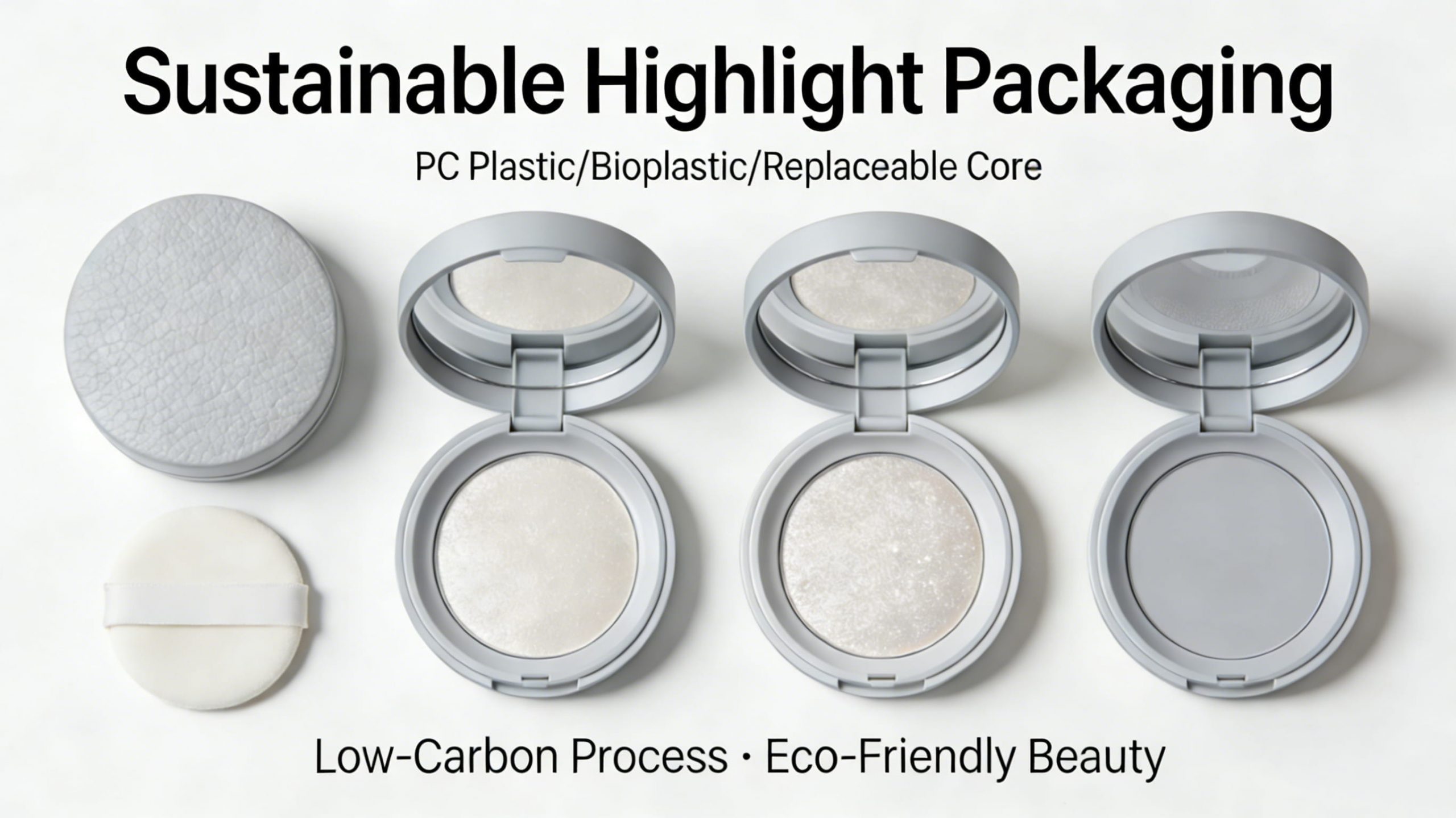
In the beauty industry, highlighter packaging is undergoing a profound paradigm shift — no longer merely an aesthetic “outer casing”, it has become a critical vehicle for brands to articulate environmental commitments, drive repeat purchases, and optimize costs. Over 60% of Chinese consumers factor sustainability into beauty purchases (McKinsey), presenting brands with an unambiguous call to action.
How to fulfill environmental goals without compromising texture, convenience, or supply chain stability? The solution lies in integrating material science, process engineering, and consumer analytics.
1. Data-Driven Material Transition: PCR & Bioplastics
PCR Plastic: Dominant for Highlighter Caps
Approximately 78% of beauty brands prioritize post-consumer recycled (PCR) plastic for caps. It reduces reliance on virgin resins, fits existing injection molds (especially thin-walled designs), maintains color/dimensional stability in mass production, and integrates seamlessly with automated lines — controlling costs while signaling a commitment to circularity.
Bioplastics: Low-Carbon Palette Option
Derived from sugarcane/corn, bioplastics cut lifecycle carbon emissions by ~65% vs. fossil-based plastics (via carbon sequestration, lower processing energy, and lighter shipping). Brands are shifting palettes from acrylic to bio-resins to meet stricter regulations and consumer expectations.
Refillable Designs: 40% Repurchase Lift
Empirical data shows replaceable inner pans boost repurchase rates by up to 40%. Cost-effective refills (magnetic/snap-fit designs, aluminum/PCR outer casings) align with eco-habits, retaining packaging aesthetics while fostering loyalty.
2. Material Selection: Balancing Performance, Carbon Footprint, Cost
Core Eco-Materials Overview
| Material | Key Advantages | Applications |
|---|---|---|
| PCR Polypropylene (PP) | 95% recyclable, ~30% carbon reduction, high durability | Caps, refillable trays |
| Bamboo Composite | ~45% carbon reduction | Outer lids, decorative parts |
| Recycled Paperboard | ~50% carbon reduction (highest) | Outer cartons, dividers |
Leading brands adopt hybrid designs (PCR plastic for core structures + recycled paperboard for outer packaging) to balance durability and sustainability.
Recycling vs. Biodegradability: Strategic Trade-Off
Recycled materials (especially PCR) leverage mature, scalable existing infrastructure. Biodegradable materials often require industrial composting (performing poorly in landfills/marine environments) — making recycled content the most scalable near-term solution (McKinsey 2024). PCR plastic also excels in sealing/chemical resistance for direct-contact packaging.
3. Decoration & Quality Standards
Low-Carbon Decoration
Eco-friendly techniques include water-based/low-VOC screen printing, ultra-thin UV metallization (reducing waste vs. electroplating), hot stamping, embossing, and eco-varnishing — delivering premium aesthetics without environmental burden.
Rigorous Quality Assurance
Adherence to AQL sampling, ISO 9001/14001 is mandatory. For liquid highlighters, tests include 500+ pump cycles, thermal cycling seal integrity, and simulated transport vibration — ensuring durability in daily use.
4. Four Core Structural Design Steps
- Tube Material: PP (chemical resistance for cream/balm) or PET (transparency/lightweight for liquid) — both recyclable.
- Surface Finish: Soft-touch (velvety), matte (modern), or UV metallization (premium); high-end products combine metallic collars with soft-touch bodies.
- Refill Mechanism: Snap-fit/twist-lock structures for easy inner pan replacement (aligning with circular economy).
- Compatibility Validation: Pumps/droppers undergo material compatibility and dispensing accuracy tests to prevent leaks.
5. Material Comparisons
| Comparison | Pros & Cons |
|---|---|
| Acrylic vs. Glass | Acrylic: Lightweight, shatterproof (mass-market); Glass: Chemically inert, clear (luxury) — but fragile, higher shipping costs |
| Aluminum vs. Plastic | Aluminum: Superior barrier properties, recycled option has low carbon footprint (reusable casings); Plastic: Low-cost complex designs, mono-material (e.g., full PP) enables easy recycling |
| Mono-Material vs. Hybrid | Mono-material (full PP): Optimal recyclability; Hybrid (with mirrors/magnets): Enhanced aesthetics/hinge strength — but higher recycling complexity |
6. Solving Key Pain Points
- Leakage: Anodized aluminum compacts (precision fit, corrosion resistance, premium finish).
- High Waste: Mono-material PP design (avoids incineration due to easy recycling).
- Cumbersome Assembly: Blow-molded one-piece palettes with snap-in refills (fewer parts, lower labor costs, longer lifecycle).