25+ Years Professional Cosmetic Packaging Manufacturer
How to Choose Custom Loose Powder Packaging for Your Beauty Brand
Choose custom loose powder packaging with practical guidance on sifters, materials, closures, decoration, testing, MOQ and bulk production.
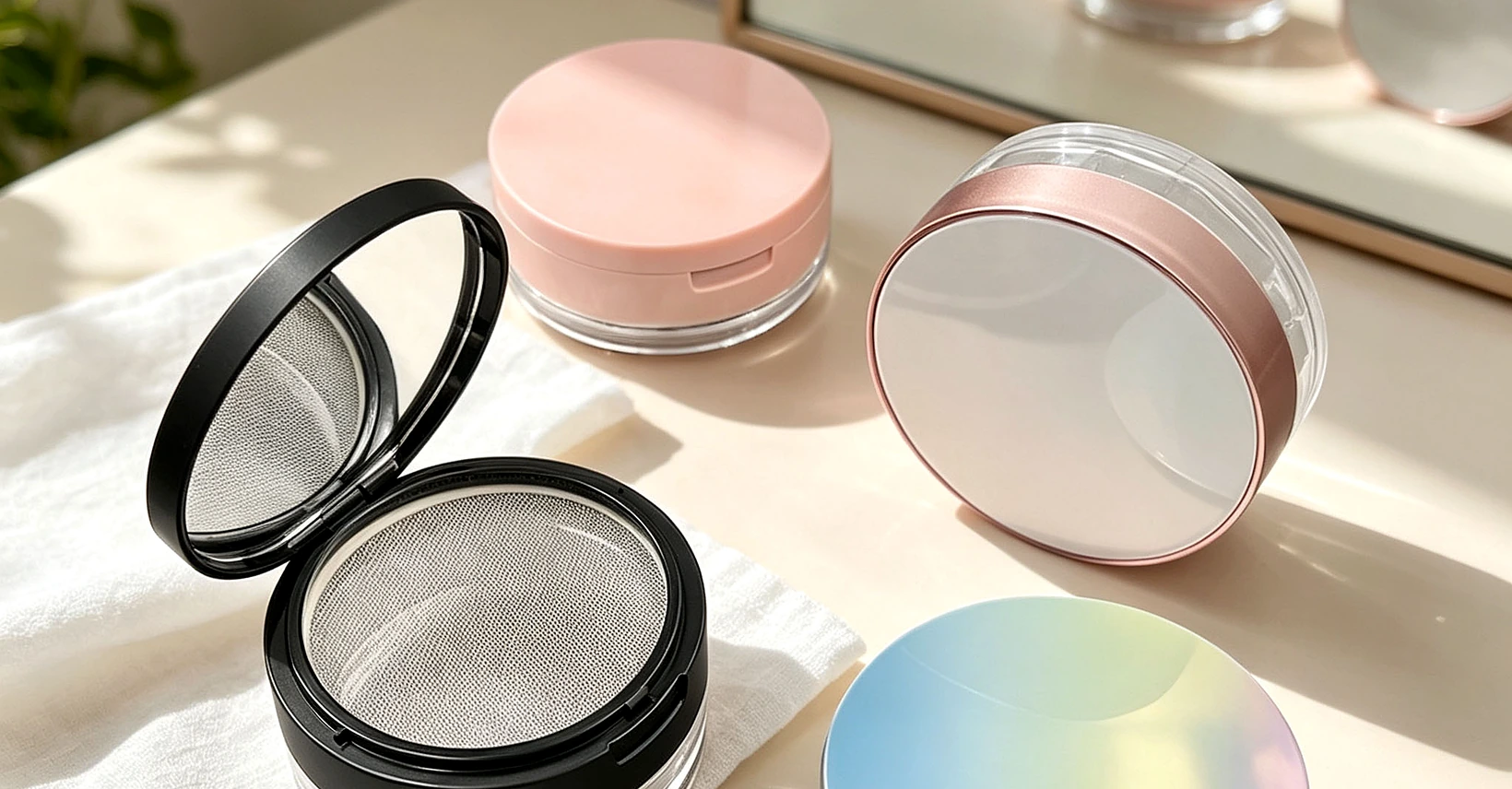
Loose powder packaging looks simple until the product reaches filling, assembly and shipping. A jar can have the right capacity but the wrong sifter opening. A lid can look premium but loosen during transport. A beautiful finish can also become difficult to protect when thousands of units move through a packing line.
For a beauty brand, custom loose powder packaging has to do several jobs at once. It must control dispensing, protect the formula, support a clean application experience, match the brand image and remain practical at the target order quantity. The best choice is not always the largest container or the most decorated one. It is the structure that works with the formula and the production process.
This guide explains the main points we discuss with overseas buyers before sampling loose powder cases. It is written for private-label brands, cosmetic manufacturers, distributors and purchasing teams that want to compare options with fewer surprises.
1. Start With the Powder and Filling Process
Before choosing an empty loose powder container, define what will go inside it. Loose setting powder, mineral powder, finishing powder, body powder and glitter powder can behave very differently. Particle size, flowability, oil content and fragrance all influence the package design.
Prepare these details for the supplier:
- Formula type and texture
- Net fill weight and target volume
- Powder density and particle size, if available
- Filling method and production speed
- Whether the product will be filled manually or automatically
- Target market and expected transport conditions
- Need for a puff, brush, mirror, inner lid or protective film
The filling method matters because the container must be stable under the actual equipment. A narrow neck, a deep cavity or a small sifter opening may be acceptable for manual filling but slow down an automated line. If your formula is still being developed, ask for packaging samples early so the product and container can be tested together.
2. Choose the Right Sifter Design
The sifter is one of the most important parts of loose powder packaging. It controls how much powder reaches the puff or brush and helps keep the product inside the container during daily use.
Hole Size and Distribution
Small holes can support controlled dispensing, while larger holes may release powder more quickly. The right pattern depends on the formula and the application method. A powder used with a soft puff may need a different opening pattern from one applied with a large face brush.
Do not approve the sifter only by looking at a drawing. Test it with the final powder. Check the first shake, the amount dispensed after repeated use and whether powder gathers around the edge of the inner lid.
Sifter Fit and Cleanliness
The sifter should sit level and remain secure after filling. Any gap between the sifter and the container can allow powder to move into the cap or outer thread. During sampling, turn the filled container upside down, shake it, open it and inspect the cap and shoulder area.
Inner Lid or Protective Seal
An inner lid can reduce mess and help separate the powder from the puff. Some projects also require a peelable seal for first-use protection. These additions affect the total height, assembly method and cost, so they should be included in the quotation from the beginning.
3. Match Capacity to Real Fill Weight
Capacity should be selected by testing the actual formula, not by converting grams directly into milliliters. Powder density varies widely, and the same container may hold different net weights depending on the product.
| Packaging detail | Why it matters |
|---|---|
| Nominal capacity | Provides a starting point for the product brief |
| Formula density | Determines the practical net fill weight |
| Container inner diameter | Affects filling and brush access |
| Sifter position | Changes usable space and dispensing behavior |
| Inner lid height | Must leave room for the powder and applicator |
| Headspace | Helps prevent powder contact with the closure |
Fill a sample with the production formula and weigh it. Then check whether the powder level, sifter and closure still work as intended. If the product will be sold as a travel size, also consider whether the container is easy to hold and open without spilling.
4. Compare Materials for Your Positioning
A loose powder packaging manufacturer may offer different material combinations for the jar, cap and sifter. The decision should reflect the price target, visual direction, decoration method and durability requirements.
PP Powder Containers
PP is widely used for cosmetic packaging because it is lightweight and suitable for many shapes and colors. It is often a practical choice for high-volume projects that need consistent molding and controlled costs.
Acrylic or AS Components
Clear or high-clarity components can create a more premium appearance and make the product look visible. They also show fingerprints, scratches and molding marks more easily, so surface protection and inspection standards need to be discussed.
Mixed-Material Structures
A plastic jar with a decorated cap, metalized ring or separate sifter can create a distinctive shelf presence. However, every added component increases assembly and quality-control points. Confirm the material of each part and how the parts will be separated or recycled in the target market.
Avoid choosing a material only because it is described as premium or sustainable. Ask how it behaves with your formula, decoration, filling line and shipping conditions.
5. Select a Closure That Survives Daily Use
The closure must feel secure while still being easy for the consumer to open. Threaded caps, snap-fit caps and special locking structures each create different user experiences.
Threaded Closures
Threaded caps can provide a familiar opening action and good retention when the thread is designed correctly. Check thread engagement, starting position and whether the cap cross-threads during assembly.
Snap-Fit Closures
Snap-fit lids can be fast to assemble and convenient for daily use. The snap should be tested for opening force, repeated cycles and resistance to accidental opening in a cosmetic bag.
Travel and Leakage Considerations
Loose powder does not leak like a liquid, but it can migrate into the cap, hinge or outer packaging. A secure closure, well-fitted sifter and suitable inner lid work together to control this problem. Drop and vibration testing should be performed on the fully filled and assembled package.
6. Plan the Applicator and User Experience
Many loose powder products are sold with a puff, sponge, brush or protective separator. These parts are not just accessories. They change the required container height and how the consumer interacts with the product.
If a puff is included, specify its diameter, thickness, material and ribbon or handle requirements. Confirm that it does not compress the inner lid or prevent the outer cap from closing. If a brush is included, check whether the bristles can be stored without touching the sifter openings.
For a loose powder case wholesale project, ask whether the quotation includes the applicator, inner lid, sifter and assembly. Comparing the price of a complete set with the price of the empty jar alone prevents misunderstandings later.
7. Use Decoration Where It Adds Value
Custom decoration helps a powder container look distinctive, but not every method is suitable for every surface.
Common options include:
- Screen printing for simple, durable graphics
- Hot stamping for metallic details
- UV printing for more complex artwork
- Spray coating for a controlled color or soft-touch effect
- Metalized or decorative components for a premium accent
- In-mold or molded details for a longer-term structural identity
Share the artwork in a usable format and identify the parts that need decoration. A logo on a curved cap may require a different process from a logo on a flat lid. Request a decorated sample instead of approving only a digital rendering. Check color, alignment, adhesion, scratch resistance and appearance under normal retail lighting.
8. Decide Between Stock Structures and New Tooling
An existing mold can shorten development time and reduce tooling investment. It may be the right solution for a new brand, a test launch or a project with a limited first order.
New tooling gives more control over shape, capacity, sifter layout and brand details. It can make sense when the product needs a distinctive silhouette or when annual volume supports the investment.
When comparing the two routes, ask for:
- Tooling cost and ownership terms
- Estimated sampling schedule
- Minimum order quantity for stock and custom versions
- Number of decoration and color options
- Repeat-order conditions
- Expected mold life and maintenance responsibility
The cheapest first quotation is not always the lowest total cost. Include sampling, tooling, assembly, decoration, inspection, packaging and freight in the project comparison.
9. Test the Complete Package Before Bulk Production
Testing an empty jar is not enough. The final evaluation should use the formula, sifter, inner lid, applicator, decoration and shipping carton that will be used in production.
At minimum, discuss these checks:
- Dimensional and visual inspection
- Cap fit and opening-force check
- Sifter retention and dispensing test
- Powder compatibility and odor transfer observation
- Drop and vibration testing
- Decoration adhesion and scratch check
- Repeated opening and closing cycles
- Carton and pallet protection review
The exact test plan depends on the market, formula and customer standard. A custom powder jar may pass a basic appearance check but still fail after transport because the sifter loosens or powder enters the cap. Testing early is usually less expensive than sorting finished goods after shipment.
10. Understand MOQ and Production Cost
MOQ for custom loose powder packaging depends on more than the container size. Material color, mold choice, decoration, accessory assembly and packaging requirements can all change the minimum order.
Ask the supplier to separate these cost items where possible:
- Packaging unit price
- Sifter and inner lid
- Puff or brush
- Decoration and color matching
- Assembly and individual packing
- Tooling or setup charges
- Sampling and courier cost
- Export carton and pallet requirements
For a first launch, a stock structure with a custom color or decoration may be more practical than fully new tooling. For an established product line, a custom mold can create stronger brand recognition and improve long-term control.
11. What to Include in Your RFQ
A clear RFQ helps a loose powder packaging manufacturer recommend a workable structure and return a more accurate quotation. Include:
- Product type and formula status
- Target net fill weight and annual quantity
- Desired container capacity and approximate dimensions
- Sifter, inner lid and applicator requirements
- Preferred material or recycled-content target
- Color reference and decoration artwork
- Existing sample or reference structure
- Destination country and shipping method
- Required testing or compliance documents
- Target sample date and launch date
If you have a physical powder sample, share it during development. If the formula is confidential, provide enough technical information for packaging compatibility and dispensing evaluation.
Frequently Asked Questions
What is the most important part of loose powder packaging?
The sifter and its relationship with the formula are usually the starting point. The container, inner lid and closure must then be checked as a complete system.
Can I use the same jar for different loose powders?
Possibly, but the net fill weight, flowability, sifter opening and applicator may change. Test each formula before confirming one structure for multiple products.
Is a custom loose powder case suitable for small brands?
Yes. Small brands can often begin with an existing structure, then use color, finish and decoration to create a distinct package. MOQ and available stock should be confirmed before sampling.
How early should I request packaging samples?
Request samples before the formula and filling process are fully locked. Early testing gives the brand time to adjust the powder, sifter or container without delaying the launch.
Build a Better Powder Packaging Brief With Belzeypack
The right loose powder package is the result of coordinated decisions about formula, dispensing, materials, decoration and production. When these details are confirmed at the sampling stage, the project is easier to quote, test and scale.
Belzeypack supplies loose powder cases for private-label brands, cosmetic manufacturers and packaging distributors. Send us your target fill weight, formula details, preferred structure, quantity and artwork. Our team can review suitable stock options and help plan samples for your market.